Summary: Royal Enfield started in Britain but found its soul in India. For UK riders, touring India on a Himalayan 450 isn’t just a motorcycle trip — it’s reconnecting with a piece of history on the roads it was built for.
There is something strangely emotional about riding a Royal Enfield motorcycle through India.
You are climbing towards Ladakh with snow-covered peaks in the distance, prayer flags moving in the wind, and a machine beneath you that somehow feels both British and Indian at the same time.
The badge on the tank says Royal Enfield. The motorcycle is built in the southern part of India, in Chennai. But the story behind that name started in a small market town in Worcestershire more than a century ago. For many UK riders, that connection changes the experience completely. Riding a Royal Enfield through India does not feel like renting a random adventure bike abroad. It feels like reconnecting with a piece of motorcycling history in the exact kind of terrain it was built for.
From Redditch to India: Where Royal Enfield Began
Royal Enfield’s roots go back to 1891, when a company called George Townsend & Co. started operations in Redditch, Worcestershire. Initially, they produced needles and precision components before later supplying parts to the Royal Small Arms Factory in Enfield.
That partnership eventually inspired the name Royal Enfield and the famous slogan:
“Made Like a Gun, Goes Like a Bullet.”
In 1901, the company produced its first motorcycle. Over the following decades, Royal Enfield became known for simple, durable machines designed to survive rough roads and hard use rather than chase outright speed. During World War II, the company supplied thousands of military motorcycles, including the legendary Flying Flea, a lightweight machine designed to be parachuted into combat zones. But the motorcycle that truly shaped Royal Enfield’s future arrived in 1932: the Bullet.
The Bike That Changed Everything
The original Bullet stood out because of its reliability and rugged nature. It was never about extreme horsepower. It was about surviving difficult roads, carrying luggage, and handling conditions where other motorcycles struggled. That philosophy ended up becoming perfect for India.
In the 1950s, the Indian government needed motorcycles capable of handling border patrol duties across Kashmir and Rajasthan. The terrain was harsh, remote, and unpredictable. Royal Enfield won the contract.
In 1955, the British company partnered with Madras Motors to create Enfield India, with motorcycles initially shipped from the UK in kit form before full local production eventually began in India. That moment quietly changed motorcycle history. Because even after the original British factory closed in the late 1960s, Royal Enfield survived and evolved in India.
Why Royal Enfield Thrived in India
While many British motorcycle brands disappeared during the rise of Japanese manufacturers, Royal Enfield found a completely different life in India. The “Bullet” became more than a motorcycle. It became part of the culture.
It was used by the military, police forces, long-distance riders, and everyday commuters across the country. Riders trusted it because it was simple, repairable, and built for rough terrain. Over time, Royal Enfield transformed from a surviving British motorcycle brand into one of the largest motorcycle manufacturers in the world. Then came the modern era.
The Royal Enfield Himalayan: Built for Indian Roads
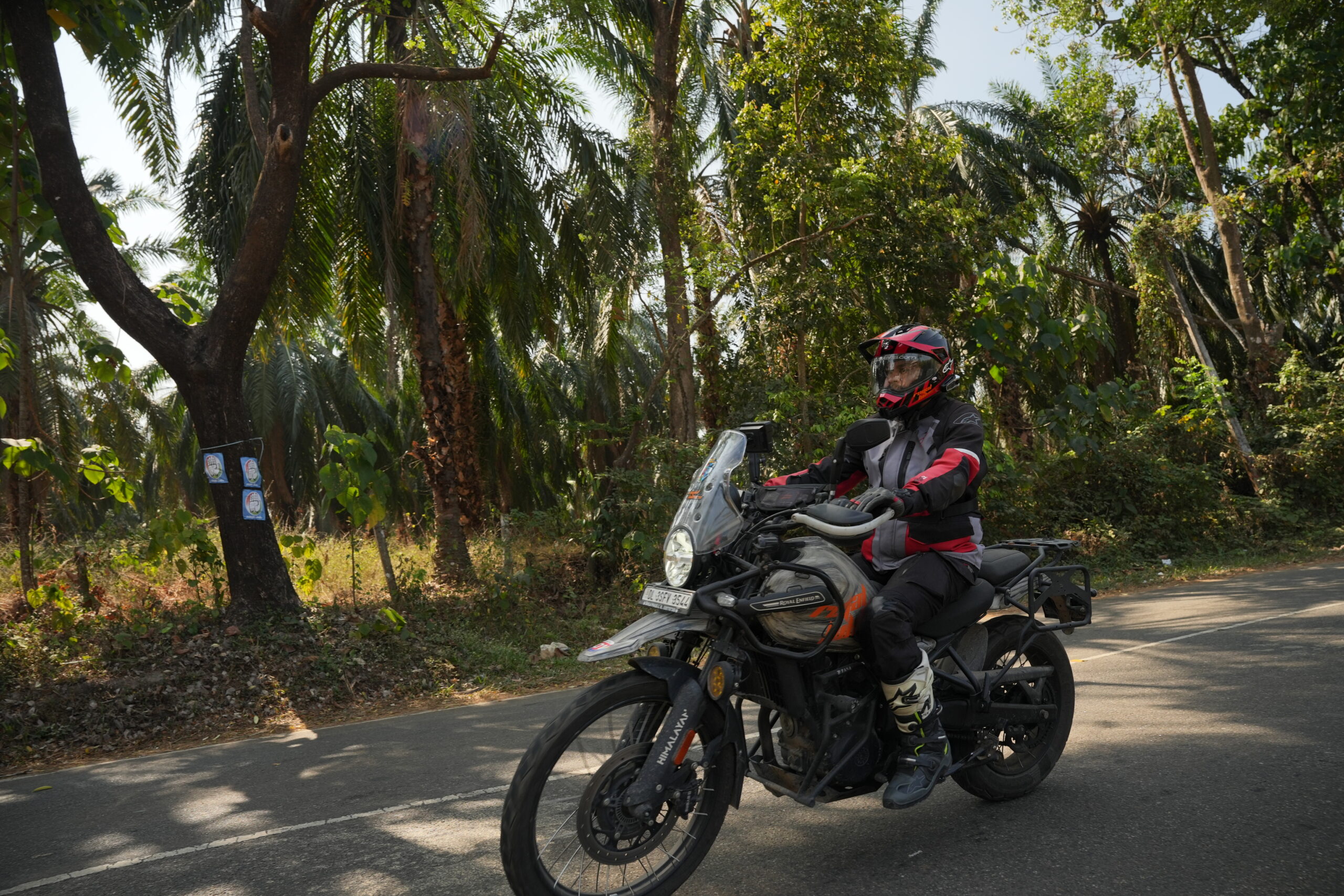
When Royal Enfield Himalayan 450 arrived, it finally gave the brand a true purpose-built adventure touring motorcycle.
And unlike many large European ADV bikes, the Himalayan was designed around real riding conditions found in India:
- Broken mountain roads
- High-altitude passes
- Gravel tracks
- Long-distance touring
- Unpredictable terrain
The current Himalayan 450 uses the new Sherpa 452cc liquid-cooled engine producing around 40 bhp and 40 Nm of torque, paired with long-travel Showa suspension and upright ergonomics designed for all-day riding comfort. It is not trying to be the fastest adventure motorcycle in the world. It is trying to be usable everywhere. That is exactly why riders love it.
Royal Enfield’s British Connection Never Really Disappeared
This surprises many riders in the UK.
Although Royal Enfield is now an Indian company, its engineering and product development still maintain strong British roots.
The company opened its UK Technology Centre in Leicestershire at Bruntingthorpe Proving Ground, where engineers and designers work on global motorcycle development. A large part of the Himalayan’s testing and refinement happened there before the bike was validated in Indian conditions.
Why Riding a Royal Enfield in India Feels Different
This is the part most riders struggle to explain properly after they return home. A Royal Enfield does not feel clinical.
It vibrates. It thumps. It feels mechanical in a very honest way. The riding position encourages you to slow down slightly and absorb the landscape instead of rushing through it. And India itself changes the experience even more.
One day you are climbing through the Himalayas. Another day you are crossing desert highways in Rajasthan. Then suddenly you are riding through small villages where mechanics still know these bikes inside out. There is something deeply satisfying about riding a motorcycle in the exact country where it evolved into what it is today. For many British riders, it almost feels like seeing the second life of a machine that originally belonged to home.
Riding the Himalayas and Rajasthan With Royal Bikers
For international riders, especially first-time visitors to India, choosing the right tour operator matters as much as choosing the motorcycle itself. Royal Bikers specialises in guided motorcycle expeditions across the Himalayas and Rajasthan using well-maintained Royal Enfield Himalayan 450 motorcycles.
What makes the experience stand out is that the tours are personally led by the founders rather than outsourced to random freelance guides. The routes, accommodations, riding pace, and logistics are designed specifically for international riders who want the adventure without the stress of handling Indian travel complexities alone.
Their tours include:
- Premium stays
- Backup support vehicles
- Mechanical assistance
- Airport transfers
- Small riding groups
- Drone photography
- Experienced lead riders familiar with every route
For UK riders wanting to experience the Royal Enfield in the environment it was truly built for, it becomes far more than a motorcycle holiday.
It feels like stepping directly into the story behind the machine itself.
Frequently Asked Questions
Is Royal Enfield originally British?
Yes. Royal Enfield began in Redditch, Worcestershire, in 1901 before production eventually expanded into India during the 1950s.
Why is the Himalayas so popular for tours in India?
Because it is built specifically for Indian terrain. The bike handles rough roads, altitude, gravel, and long touring days comfortably while remaining mechanically simple and reliable. Thus it is aptly made for all roads & no roads.
Is the Royal Enfield Himalayan beginner friendly?
Yes. The power delivery is smooth, the riding position is relaxed, and the motorcycle feels approachable even for riders with limited adventure touring experience.
Does Royal Enfield still have UK operations?
Yes. The company operates a major engineering and development centre in Leicestershire, UK.
Which Royal Enfield is best for Indian motorcycle tours?
The Royal Enfield Himalayan 450 is currently considered the best overall option for guided Himalayan, Rajasthan, Kerala, Northeast India, and Spiti tours because of its balance of comfort, suspension travel, reliability, and touring capability.